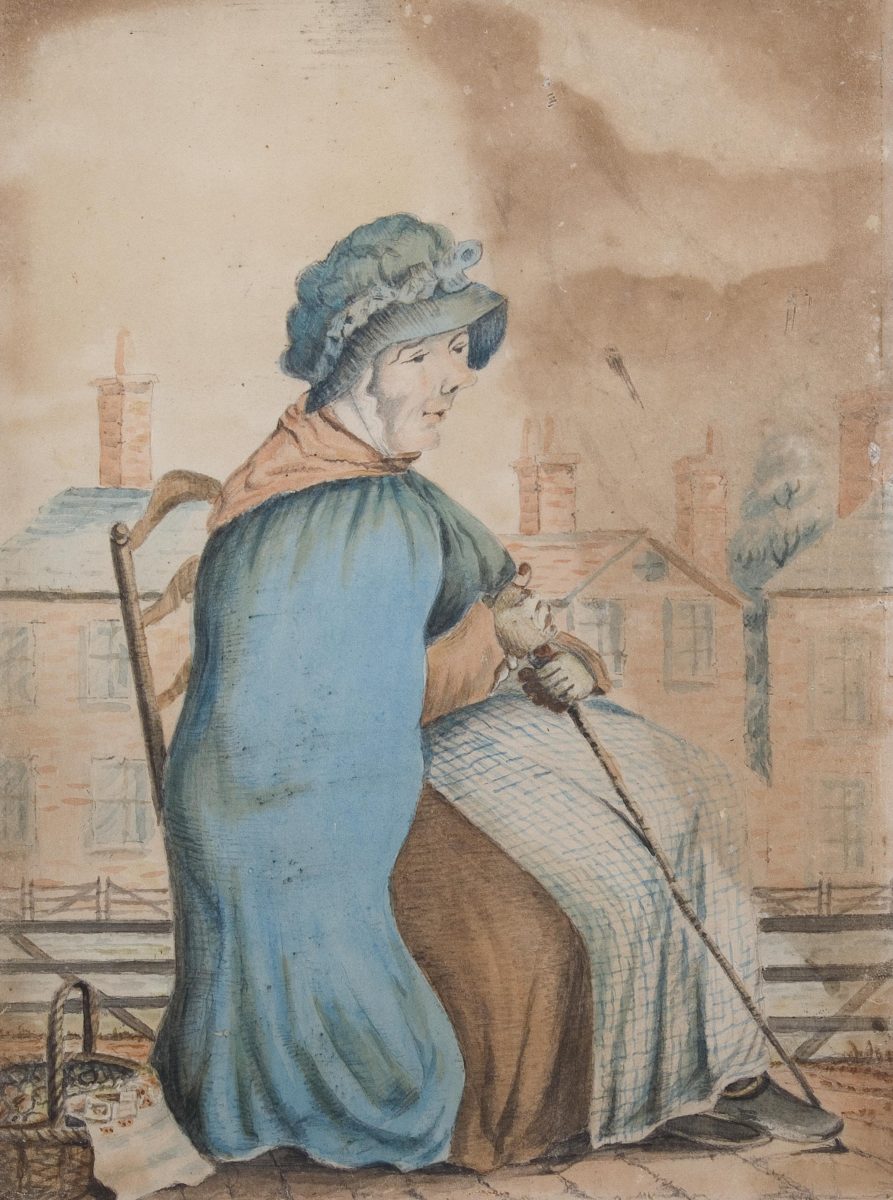
It began as a sudden strange fancy…
Polly Perks had to become a boy in a hurry. Cutting off her hair and wearing trousers was easy. Learning to fart and belch in public and walk like an ape took more time…
And now she’s enlisted in the army, and is searching for her lost brother.
But there’s a war on. There’s always a war on. And Polly and her fellow recruits are suddenly in the think of it, without any training, and the enemy is hunting them.
All they have on their side is the most artful sergeant in the army and a vampire with a lust for coffee. Well…they have the Secret. And as they take the war to the heart of the enemy, they have to use all of the resources of…the Monstrous Regiment.
Pratchett, Terry (2003) Monstrous Regiment. London, England : Doubleday

The plot of Terry Pratchett’s Monstrous Regiment revolves around women dressing as men and joining the army with unpredictable and occasionally hilarious results.
But what can women dressing as men and joining the army possibly have to do with a weathered gravestone in a Brighton churchyard high above the town? Join me for World Book Day as we go to the church of St. Nicholas to find out.
The parish church of St Nicholas in Brighton sits high above the town and dates back to the 14th century although a church has existed somewhere in this area since the 11th century. Many of the graves in the old graveyard have been relocated and few remain in situ but one stands alone encircled by railings. It is rather weathered and can be somewhat difficult to read but the inscription states:
In Memory of
Phoebe Hessel
who was born in Stepney in the year 1713
She served for many years
as a private Soldier in the 5th Regt. of foot
in different parts of Europe
and in the Year 1745 fought under the command
of the Duke of Cumberland
at the battle of Fontenoy
where she received a bayonet wound in the Arm
Her long life which commenced in the time of
Queen Anne
extended to the reign of
George IV
by whose munificence she received comfort
and support in her latter years
She died at Brighton where she had long resided
December 12th 1821 Aged 108 years

Who was this remarkable woman who appears to have had such a fascinating life?
Phoebe Hessel appears to have started life as Phoebe Smith and was baptised at St Dunstan’s in Stepney on the 13th April 1713. Little seems to be known about her parents or her childhood but some stories state that her father was a soldier and when her mother died, he dressed Phoebe as a drummer boy and took her on campaign. Another version states that he was a soldier and his wife and daughter both went with him when he went into the army.
Later it is said that Phoebe followed her lover into the army so that she could be with him and served for a number of years in the 5th Regiment of Foot (now absorbed into the Northumberland Fusiliers). Phoebe served as a soldier in the West Indies and Gibraltar and finally in the 1745 Battle of Fontenoy against the French. It is in this battle that Phoebe was wounded in the arm by a bayonet.
At some point soon after this battle Phoebe was discovered to be female and discharged from the army. Some versions of her story say that she revealed she was female to an officer’s wife and another version states that it was discovered when she was about to be punished.
Following the discovery and her discharge, Phoebe and her lover returned to England where they settled in Plymouth, married and had nine children. Most versions of her story state that only one child survived to adulthood but was lost at sea.

On the death of her husband Phoebe moved to Brighton and married a fisherman, Thomas Hessel. Thomas died when Phoebe was 80 and she then eked out a living hawking fish from place to place.
Her story came to the attention of the Prince Regent, later George IV, and the London Chronicle of 29th October 1817 stated, “His Royal Highness has now commanded that half a guinea weekly shall be regularly paid to her from the Royal purse as long as she lives”.
She died in Brighton on the 12th December 1821 and a local pawnbroker paid for the gravestone that marks her resting place.
It has been reported that in the 1970s the Northumberland Fusiliers, which had absorbed the 5th Regiment of Foot, had restored the grave and even prior to this they had ensured it was maintained.
In Brighton they have named a bus Phoebe Hessel, while in Stepney in the London Borough of Tower Hamlets, Hessel Street and Amazon Street are named after her.

Earlier last year (2025) the Fusiliers Museum of Northumberland at Alnwick opened a new exhibition called ‘Women in the Fusiliers’ and the exhibition starts with the story of Phoebe Hessel and the ‘gradual integration of women until the modern day’. Well worth a visit I would think if you are ever in that beautiful part of the country.
There have been some who question whether Phoebe Hessel ever actually served in the army or whether it was just a tall tale to get people to part with money. However, the Northumberland Fusiliers have accepted her as one of their own and in Brighton she is still seen as a heroine, someone who crossed the boundaries of the age to tread her own path.

If you are ever in Brighton do make time to walk up Dyke Road to visit her grave. She truly was a remarkable woman and deserves to be remembered.
Further reading and sources:
Pratchett, Terry (2003) Monstrous Regiment. London, England : Doubleday
Carder, Timothy (1990) The encyclopaedie of Brighton. Lewes, England : East Sussex County Libraries
https://en.wikipedia.org/wiki/Phoebe_Hessel
https://www.mybrightonandhove.org.uk/places/placechur/st_nicholas_brighton/st-nicholas-brighton-9
https://www.londonmuseum.org.uk/collections/v/object-453622/phoebe-hessel-an-old-brighton-celebrity/
https://www.onthisday.com/articles/king-salutes-remarkable-woman-soldier
https://archive.queensparkbooks.org.uk/her-story
Leave a Reply